Sr-22 Insurance in California

california sr 22 insurance requirements

Imagine driving down the California coast, the sun shining, but a shadow looms over your insurance status. If you’ve faced serious traffic violations, you might need SR-22 insurance. This isn’t just another policy; it’s a lifeline for high-risk drivers, verifying your financial responsibility. Understanding its requirements and implications is vital, especially if you want to avoid severe penalties and keep your license intact. What steps do you need to take next?

Key Takeaways

  • SR-22 insurance is a certificate proving financial responsibility, required for high-risk drivers in California, particularly after DUIs or multiple violations.
  • Minimum coverage for SR-22 includes $15,000 bodily injury per person, $30,000 per accident, and $5,000 property damage.
  • Typically, the SR-22 requirement lasts three years, but any lapse in coverage can reset this period.
  • Monthly premiums for SR-22 insurance average around $350, with DUI convictions significantly increasing rates.
  • Non-compliance with SR-22 requirements can lead to license suspension and higher insurance costs.

What Is SR-22 Insurance?

sr 22 financial responsibility certificate

When you hear about SR-22 insurance, it’s important to understand that it’s not actually a type of insurance but rather a certificate of financial responsibility required by California law.

This certificate verifies that you carry the minimum required auto insurance coverage, ensuring you can financially handle accidents and damages. The SR-22 guarantees continuous insurance at the state’s minimum levels, which include $15,000 for bodily injury per person, $30,000 per accident, and $5,000 for property damage per accident.

Your insurance company must file the SR-22 form with the DMV, and they’ll keep your insurance status updated. If there’s a lapse in coverage, the DMV will be notified, which can impact your driving privileges. Additionally, the SR-22 is mandated for high-risk drivers, including those with DUIs or multiple traffic violations.

Why Is SR-22 Insurance Required?

SR-22 insurance is required for several reasons, primarily to guarantee that drivers meet California’s financial responsibility laws.

SR-22 insurance ensures compliance with California’s financial responsibility laws for drivers facing specific legal issues.

If you’ve faced certain legal issues, you might need this form of insurance. Here are some common causes for the requirement:

  • DUI convictions often necessitate an SR-22 for reinstating driving privileges.
  • Being involved in accidents without insurance can lead to needing an SR-22 filing.
  • Multiple traffic violations causing negligence can require an SR-22.
  • If you’ve been mandated to use an ignition interlock device, you’ll need an SR-22. Additionally, maintaining minimum liability insurance is crucial to comply with state regulations.

Eligibility for SR-22 Filing

To qualify for SR-22 filing in California, you need to have specific traffic violations, like DUIs or reckless driving, on your record.

Additionally, your license status plays a vital role; if your license is suspended, you must file for SR-22 to regain it.

Understanding these eligibility criteria is important to guarantee you meet the necessary requirements.

Qualifying Offenses

If you’ve faced certain driving offenses in California, you may need to file for an SR-22. These qualifying offenses often lead to mandatory insurance filings:

  • DUI/DWI convictions, especially with high BAC levels or refusals to test
  • Reckless driving, including excessive speeding, street racing, and hit-and-run incidents
  • Uninsured driving, such as violations of the California Insurance Code or accidents without coverage
  • Repeat violations, like multiple moving violations within a year or habitual traffic offender status

Being aware of these offenses can help you understand the necessity of obtaining SR-22 insurance to reinstate your driving privileges and comply with state regulations.

License Status Requirements

After facing qualifying offenses, understanding the license status requirements for SR-22 filing in California is essential to regaining your driving privileges.

To be eligible, you must maintain the state’s minimum insurance coverage, which includes $15,000 for bodily injury per person, $30,000 per accident, and $5,000 for property damage.

Your insurance company will file the SR-22 with the DMV, serving as proof of compliance. It’s vital to maintain continuous coverage during the SR-22 period; any lapse can lead to immediate notification to the DMV and potential suspension of your license.

Be aware that the DMV performs regular checks, and any failure to comply could result in penalties or further loss of driving privileges.

Coverage Requirements for SR-22

When you need an SR-22, you’ll have to meet specific liability coverage requirements.

This includes a minimum of $15,000 for bodily injury per person and $5,000 for property damage per accident.

Additionally, while uninsured or underinsured motorist coverage must be offered, you can choose to decline it in writing.

Liability Coverage Details

In California, drivers must understand the specific liability coverage requirements for SR-22 insurance to guarantee compliance.

You need to meet the following minimum coverage limits:

  • Bodily Injury Per Person: $15,000
  • Bodily Injury Per Accident: $30,000
  • Property Damage: $5,000
  • Continuous Coverage: Must remain uninterrupted for the SR-22 period

These limits are legally mandated by California’s Department of Motor Vehicles (DMV) and are essential for reinstating your driving privileges after a suspension.

Remember, having the correct liability coverage not only fulfills the SR-22 filing requirements but also protects you in case of accidents.

Failure to maintain this coverage can lead to severe penalties, including additional license suspension.

Additional Coverage Options

While meeting the minimum liability coverage is essential for SR-22 insurance, considering additional coverage options can greatly enhance your financial protection on the road.

Collision coverage protects your vehicle from accident-related damages, while extensive coverage covers losses from theft or natural disasters. Both aren’t legally required but are highly beneficial.

Uninsured/underinsured motorist coverage protects you if you’re in an accident with a driver lacking sufficient insurance. If you frequently rent vehicles, rental car coverage can also be a wise addition.

Finally, gap insurance helps cover the difference between your car’s value and any remaining loan balance if it gets totaled. These options provide peace of mind and financial security beyond basic requirements.

Financial Implications of SR-22 Insurance

Understanding the financial implications of SR-22 insurance is essential, especially since it often results in noticeably higher premiums for drivers labeled as high-risk.

Here are some important costs to take into account:

  • Monthly Premiums: Expect to pay around $350 per month for SR-22 insurance.
  • Annual Costs: Full coverage averages $2,573 in California, higher than the national average.
  • DUI Impact: A DUI can spike your rates by 156%, averaging $6,589 annually.
  • Filing Fees: Insurers typically charge a fee of $25-$50 for the SR-22 form.

These factors combined can greatly affect your budget, making it vital to understand the long-term financial responsibilities associated with SR-22 insurance.

Filing Process for SR-22 in California

sr 22 filing requirements california

When you file for an SR-22 in California, your insurance company has specific responsibilities to fulfill.

They must submit the SR-22 form directly to the DMV as proof of your insurance coverage.

Additionally, the DMV requires timely notifications about your coverage status to guarantee your driving privileges are reinstated.

Insurance Company Responsibilities

Insurance companies play an essential role in the SR-22 filing process in California, as they’re responsible for submitting the necessary form to the Department of Motor Vehicles (DMV) on your behalf.

Their responsibilities include:

  • Filing the SR-22: They file the form electronically or by mail, based on their procedures.
  • Policy Type: They can provide SR-22 filings for both owner and non-owner policies.
  • Coverage Verification: The SR-22 form verifies that you meet California’s minimum liability insurance requirements.
  • Notifying the DMV: If there are any changes to your insurance contract, like a lapse in coverage, they must notify the DMV immediately.

Understanding these responsibilities helps you navigate the SR-22 process smoothly.

DMV Notification Requirements

While the SR-22 filing process may seem straightforward, it’s important to know the DMV’s notification requirements to confirm compliance.

Your insurance provider, licensed in California, will file the SR-22 form on your behalf, proving you have the necessary coverage. It’s essential to verify that they maintain and file this documentation correctly, as any lapse can lead to complications, including license suspension.

If your insurance is canceled during the SR-22 period, the DMV must be notified immediately to avoid further penalties.

Duration of SR-22 Requirement

sr 22 requirement duration explained

The duration of the SR-22 requirement typically lasts three years for most violations, ensuring that drivers maintain financial responsibility after certain infractions.

Here are some key points to take into account regarding the SR-22 obligation:

  • DUI-related suspensions: You’ll face a mandatory three-year requirement after license reinstatement.
  • Continuous coverage: Any lapses in your insurance will reset the three-year clock.
  • Severity impact: More serious offenses might extend your SR-22 period beyond three years.
  • Interstate compliance: If you move out of California, the requirement still applies.

Being aware of these factors is essential to managing your SR-22 requirements effectively and avoiding unnecessary complications.

Maneuvering the legal considerations of SR-22 insurance in California can feel overwhelming, but understanding the requirements can simplify the process.

First, your insurer must file the SR-22 directly with the DMV, confirming you meet liability coverage. There are three types of SR-22 forms, depending on whether you own a vehicle or not.

It’s essential to file immediately after any license suspension to begin the reinstatement process. Your policy must maintain minimum liability limits and remain active without lapses; otherwise, you risk automatic suspension.

Also, be aware that SR-22 is mandatory for specific offenses, including DUI and uninsured accidents.

Finally, transfers between insurers require a new SR-22 filing, so plan accordingly.

Consequences of Non-Compliance

Failure to comply with SR-22 requirements can lead to serious consequences that impact your driving privileges and financial situation. Understanding these repercussions is vital for maintaining your status on the road.

Here are some potential outcomes you might face:

  • License Suspension: Your driver’s license could be suspended.
  • Increased Insurance Costs: Non-compliance often raises your insurance premiums.
  • Reinstatement Fees: You may have to pay additional fees to reinstate your license.
  • Registration Difficulties: A suspended license can complicate vehicle registration.

These consequences not only jeopardize your ability to drive legally but can also lead to mounting financial burdens. Staying compliant with SR-22 requirements is essential to avoid these pitfalls.

Steps for License Reinstatement After SR-22

license reinstatement process steps

After facing the consequences of non-compliance with SR-22 requirements, you may be keen to regain your driving privileges. To start the reinstatement process, make sure you’ve completed the full suspension period mandated by the court or DMV.

Next, pay the reinstatement fee, typically $55. You’ll need to submit the SR-22 form, proving you have the required insurance, and complete any necessary courses, such as traffic school or DUI classes.

It’s vital to resolve all pending criminal charges linked to your suspension. Once you’ve gathered all documentation, submit it to the DMV.

Keep your SR-22 coverage active to avoid lapses, and follow up with the DMV to confirm your reinstatement status.

Frequently Asked Questions

Can I Drive Without an SR-22 if My License Is Suspended?

You can’t drive legally if your license is suspended. Ignoring this can lead to serious consequences, including misdemeanor charges and extended penalties. Always guarantee your license is reinstated before getting behind the wheel.

Will My Insurance Company Notify Me About SR-22 Status Changes?

Like a lighthouse guiding ships, your insurance company should notify you about SR-22 status changes. It’s essential to stay informed, ensuring you remain compliant and avoid any penalties or lapses in coverage.

Can I Switch Insurance Providers While Having an SR-22?

Yes, you can switch insurance providers while having an SR-22. Just verify your new insurer files the SR-22 with the DMV promptly to maintain compliance and avoid any lapses in coverage during the change.

Does an SR-22 Affect My Ability to Get a Loan?

An SR-22 doesn’t directly disqualify you from getting a loan, but lenders might view it as a risk factor. Focus on maintaining good credit and financial stability to improve your chances of approval.

Are There Alternatives to SR-22 for Fulfilling Insurance Requirements?

Yes, you’ve got alternatives! Consider non-owner policies, public transportation, or even biking. Each option can help fulfill insurance requirements without the need for traditional coverage. Evaluate your situation to find the best fit for you.

Conclusion

To summarize, SR-22 insurance is crucial for high-risk drivers in California to maintain their driving privileges. Think of it as your insurance safety net; without it, you risk losing your license. By understanding the requirements, coverage, and consequences of non-compliance, you can navigate this process more smoothly. Remember, staying informed and compliant is key—don’t let a lapse in coverage turn your driving dreams into a nightmare. Keep your records straight, and you’ll be back on the road in no time!

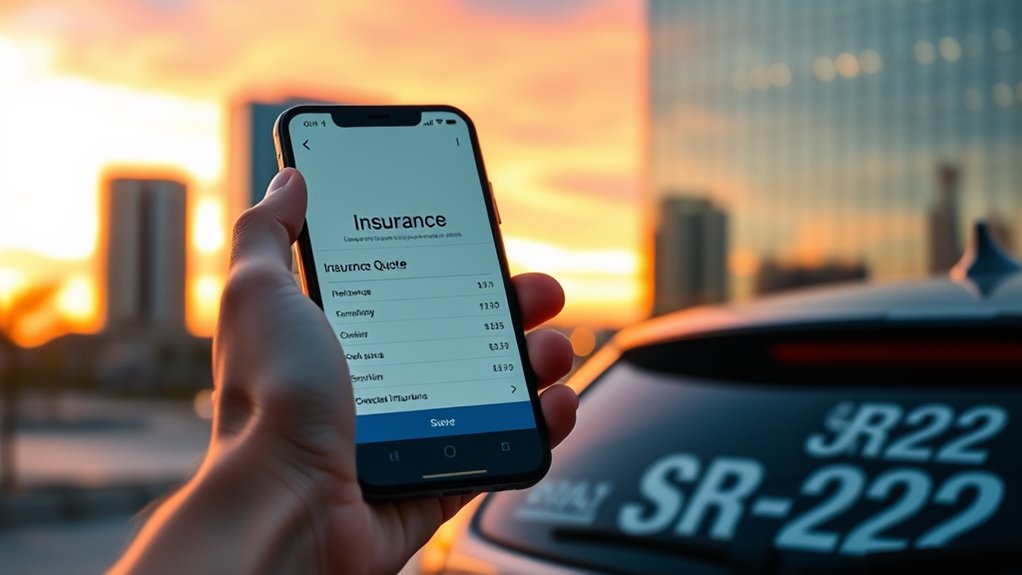
7 Tips for Renewing Insurance Costs in California

renewing insurance costs tips

Renewing your insurance in California can be an intimidating task, but it doesn't have to be. By understanding key factors like your current policy, potential discounts, and your driving record, you can greatly cut costs. It's crucial to approach this process methodically to guarantee you're not overspending. Curious about the specific steps you can take to maximize your savings and tailor your coverage? Let's explore the best strategies together.

Key Takeaways

  • Review your current insurance policy for coverage limits and potential gaps to ensure you're adequately protected.
  • Shop around for competitive rates by comparing quotes from multiple providers annually, as rates frequently change.
  • Inquire about available discounts, such as multi-policy bundles or non-smoker discounts, to lower your premiums.
  • Monitor renewal deadlines closely to avoid late penalties and ensure timely submission of required documentation.
  • Customize your coverage based on specific needs, balancing between minimum and full coverage to manage costs effectively.

Understand SR22 Insurance Requirements

sr22 insurance compliance guidelines

When you're maneuvering the complexities of auto insurance in California, understanding SR22 insurance requirements is essential, especially if you've faced major traffic violations.

An SR22 isn't insurance but a "Certificate of Financial Responsibility" that proves you meet minimum coverage requirements. This certificate is important for reinstating your driving privileges after incidents like DUI offenses or at-fault accidents without insurance. It's crucial to remember that SR-22 is required for a specified period, which varies based on the severity of your violation.

An SR22 serves as proof of financial responsibility, crucial for regaining driving privileges after serious violations.

You'll need at least $15,000 per person and $30,000 per accident for bodily injury liability, plus $5,000 for property damage. Your insurance company files the SR22 with the DMV, and you must maintain coverage for three to five years, depending on your violation. Failing to keep continuous coverage can lead to further penalties and license suspension, as the failure to maintain coverage can result in additional fines or even a longer SR22 requirement.

Review Your Current Insurance Policy

Before renewing your insurance, it's crucial to thoroughly review your current policy to guarantee it still meets your needs.

Start by examining the policy terms and understanding your coverage limits—this prevents both over-insuring and under-insuring. Check your deductible amounts to assess your financial readiness in case of a claim. Be aware of any premium changes since your last renewal, and identify any excluded services that might necessitate additional coverage.

Look for coverage gaps and consider how pre-existing conditions or experimental treatments are handled. Familiarize yourself with the claims process and required documentation, ensuring you know the timelines for settlement.

Staying updated on California regulations can also help you navigate your renewal more effectively.

Shop Around for Better Rates

Reviewing your current insurance policy sets the stage for exploring better options. Start by researching multiple providers; companies like Grange Insurance Association and Auto Club of SoCal offer competitive rates tailored to your needs.

Utilize comparison tools from the California Department of Insurance to evaluate premiums across different insurers effectively. Since insurers adjust their rates regularly, it's smart to compare quotes annually.

Don't overlook local insurers, as they may provide better rates and personalized service. Customize your coverage based on your specific requirements, keeping in mind that the cost varies considerably between minimum and full coverage.

Check for Discounts and Financial Assistance

explore discounts and aid

Although many insurance policies come with standard rates, you might be missing out on significant savings by not checking for available discounts and financial assistance options.

Here are some discounts you should inquire about:

  1. Multi-Policy Discount: Bundle auto and homeowners insurance for potential savings up to 20%.
  2. Non-Smokers Discount: Households without smokers can often reduce premiums.
  3. Burglar Alarm Discount: Installing security systems may lower your insurance costs by minimizing theft risks.
  4. Income-Based Discounts: Proposed regulations aim to provide equitable discounts for lower-income individuals.

Additionally, explore state-sponsored programs and group insurance plans that can further reduce your costs.

Always ask your insurer about any specific programs or discounts that may apply to your situation.

Keep Your Driving Record Clean

Maintaining a clean driving record is essential not only for your safety but also for keeping your insurance premiums manageable. By driving defensively and obeying traffic laws, you minimize the risk of accidents and avoid costly violations. Each traffic violation increases your perceived risk to insurers, potentially leading to higher premiums.

Completing a defensive driving course can enhance your skills and even remove points from your record. Additionally, staying distraction-free while driving is vital in preventing accidents. Remember, serious violations, like DUIs, can drastically increase your rates or lead to policy non-renewal.

Regularly reviewing your driving record helps catch inaccuracies that could unfairly affect your insurance costs. Prioritize these practices to enjoy long-term savings on your premiums.

Update Your Personal Information

Updating your personal information with your insurance provider is essential for guaranteeing you receive important communications and renewals without delay.

Updating your personal information with your insurance provider is crucial for timely communications and renewals.

Here are some key steps to follow:

  1. Use Official Channels: Update your information electronically through approved services like Sircon.
  2. Notify Immediately: Inform your insurance commissioner right away about any address or contact changes.
  3. Keep Contact Details Current: Regularly update your email and phone numbers to guarantee timely communications.
  4. Check for Renewal Notices: Regularly verify your mailbox for renewal notifications to avoid lapses in coverage.

Monitor Renewal Deadlines and Procedures

track renewal deadlines procedures

To guarantee a seamless insurance renewal process in California, it's important to closely monitor renewal deadlines and procedures.

The California Department of Insurance sends renewal notices 90 days before your license expires, so keep an eye on your email or mail for these notifications.

You can complete renewals online through the CDI's service, but make sure to submit your continuing education hours beforehand.

If you miss the deadline, you could face a 50% late renewal penalty, and after a year, you'll need to reapply.

Utilize online tools and resources available on the CDI and Covered California websites to facilitate this process, ensuring you stay compliant and avoid unnecessary fees.

Staying proactive will save you time and money.

Conclusion

Renewing your insurance doesn't have to feel like pulling teeth. By following these tips, you can navigate the process smoothly and potentially save a good chunk of change. Remember to review your policy, shop around, and stay on top of discounts and deadlines. With a proactive approach, you'll not only secure the coverage you need but also make your wallet a little happier. So, take the reins and make insurance renewal work for you!

Why Consider Alternatives to SR22 Insurance in California?

alternatives to sr22 insurance

Imagine exploring California's bustling streets without the burden of high insurance premiums weighing you down. Considering alternatives to SR-22 insurance might just be the key to regaining your independence while also saving money. Options like non-owner SR-22 insurance or alternative transportation methods can provide viable solutions. But what if you could maintain your mobility and cut costs at the same time?

If you've found yourself needing SR-22 insurance in California due to a driving violation, you might be looking for alternatives that can help you manage costs and maintain your independence. SR-22 isn't an insurance type but rather a form that certifies you have sufficient liability insurance, often required after serious infractions like a DUI. This requirement can considerably increase your insurance premiums, as insurers view you as a higher risk. Understanding the costs and exploring alternatives can help you make informed decisions.

Typically, the average cost for SR-22 insurance in California hovers around $125 for minimum coverage and $302 for full coverage monthly. Certain providers do offer competitive rates, such as CSAA, which provides minimum SR-22 coverage for as low as $40 a month. If you don't own a vehicle, you can opt for a non-owner SR-22, which might cost you around $62 a month from Farmers. This coverage permits you to meet legal obligations while also saving money, especially if you frequently rent vehicles.

The average monthly cost for SR-22 insurance in California is around $125, with some providers offering rates as low as $40.

If you're considering alternatives to SR-22 insurance, think about public transportation. Using buses or trains can help you avoid the costs associated with driving altogether. Carpooling is another practical option, allowing you to share rides with friends or colleagues, reducing wear and tear on their vehicles and saving money on gas. For shorter distances, cycling or walking can be not only cost-effective but also beneficial for your health. Motorized bikes are another option that can make short trips easy and affordable.

Non-owner SR-22 insurance provides liability coverage without the need for vehicle ownership. This type of policy is particularly advantageous if you need to reinstate your license but don't own a car. It covers third-party damages but won't protect your rental vehicle, so you'll want to weigh the benefits carefully. While some may think traditional insurance is the only route, non-owner policies can often be cheaper and just as effective in helping you meet your legal requirements. SR-22 insurance is not an insurance policy but a certification of financial responsibility, which can help clarify its role in your overall insurance strategy.

It's essential to remain compliant with your state's regulations. In California, maintaining active SR-22 insurance during the designated period is vital for license reinstatement. Insurers must communicate with the DMV to verify your coverage, and failing to keep up with payments can lead to policy cancellation and potential license suspension. Knowing the legal landscape is key to avoiding additional fines or complications.

While the financial burden of high premiums can be intimidating, remember that there are ways to mitigate these costs. Some insurers offer discounts for bundling policies or completing safety courses. By planning your finances carefully, you can budget for SR-22 insurance and explore alternatives that suit your lifestyle better. Ultimately, weighing your options can lead you to a solution that meets your needs while keeping your expenses manageable.

Conclusion

In the landscape of California's insurance options, exploring alternatives to SR-22 insurance can be a refreshing change. By considering non-owner policies or embracing alternative transportation methods, you can navigate the road to financial freedom while sidestepping high premiums. Just like a well-planned route can lead you to your destination faster, these choices can help you reclaim your independence and promote a healthier lifestyle. Don't let insurance costs weigh you down—take the scenic route to savings.

Why Choose Affordable SR22 Insurance in California?

affordable sr22 insurance benefits

When life throws you a curveball, like needing SR-22 insurance in California, finding an affordable option can feel overwhelming. High-risk designations often lead to steep premiums, but you don't have to settle for financial strain. Choosing affordable SR-22 insurance can help you meet state requirements, manage costs, and speed up your license reinstatement. Discovering how to navigate this process effectively could make all the difference in regaining your driving privileges.

If you've found yourself needing SR-22 insurance in California, you're not alone; many drivers face this requirement after serious violations like DUIs. Understanding what SR-22 insurance entails is fundamental. It's not an insurance policy but a certificate proving that you meet the minimum liability coverage mandated by the state. Your insurance provider files this certificate with the California Department of Motor Vehicles (DMV), and you'll need to maintain it for typically three years. Continuous coverage is critical during this period; if you let it lapse, you risk resetting your SR-22 requirement.

Choosing affordable SR-22 insurance can greatly reduce the financial strain of being classified as a high-risk driver. Affordable options exist that allow you to maintain the necessary coverage without overwhelming your budget. Lower premiums can help you comply with state regulations, guaranteeing you don't face additional hardships. By opting for cost-effective policies, you can manage the extra expenses that come with your high-risk designation. Furthermore, affordable SR-22 insurance can speed up your license reinstatement process, getting you back on the road sooner. SR-22 insurance typically requires continuous coverage for up to three years after serious traffic violations.

Several factors influence the cost of SR-22 insurance. Your driving history, location, and the insurance provider you select all play a role in determining your premiums. For instance, if you've had a DUI, you might find that your insurance rates remain elevated even after the SR-22 requirement ends. Also, losing any good driver discounts due to violations can lead to higher premiums.

Insurance companies typically regard SR-22 holders as high-risk, which directly impacts pricing. Don't forget that filing fees for the SR-22 certificate can add another $25 to $40 to your overall costs.

When searching for the cheapest SR-22 insurance in California, it's important to compare different providers. For example, CSAA offers the most affordable minimum coverage at around $40 per month, while National General provides full coverage for about $127 monthly. Farmers has competitive rates for non-owner SR-22 insurance at approximately $62 per month. By comparing quotes, you can find substantial savings, as rates can vary greatly even for the same coverage based on your location and the insurer's policies.

To obtain affordable SR-22 insurance, start by contacting providers that specialize in SR-22 filings. They'll guide you through the process and confirm the certificate is properly submitted to the California DMV. You may need to evaluate payment plans to keep continuous coverage.

Also, look for instant SR-22 filing services that can expedite your license reinstatement. A thorough review of the policy terms is indispensable; knowing what you're getting guarantees you make the best choice for your situation.

Conclusion

In the journey of driving, finding affordable SR-22 insurance in California is like discovering a hidden gem in a vast desert. It not only lightens your financial load but also paves the way for reclaiming your freedom behind the wheel. By exploring your options and comparing rates, you can secure the coverage you need without breaking the bank. Embrace this opportunity to steer towards a brighter, more secure future, and let the open road beckon you once again.

What Is the Duration for California Insurance?

california insurance duration specifics

When considering insurance options in California, it's essential to understand the specific durations for short-term plans. These plans can offer coverage for up to 185 days, with a potential renewal for another similar term. However, keep in mind that changes in federal regulations could impact this flexibility. Knowing these details can help you make informed choices, but there are nuances that warrant further exploration. What do these implications mean for your coverage needs?

When maneuvering the complexities of insurance in California, understanding the duration of various plans is vital to making informed decisions. Short-term insurance typically lasts less than three months under federal rules, but California offers a unique twist by allowing these plans to extend up to 185 days with one possible renewal. This flexibility can be essential for those in need of temporary coverage, particularly when other options mightn't be as accessible.

Understanding California's short-term insurance allows for coverage extensions up to 185 days, providing crucial flexibility for temporary needs.

You should be aware, however, that with proposed federal changes on the horizon, these regulations might shift. There's talk of reverting to pre-2016 standards which could permit longer durations, provided insurers approve.

Renewal options are also significant. If you choose a short-term plan, you can renew your policy for another 185 days, but keep in mind that the effective renewal limit may be reduced to around 179 days if federal changes take effect. Understanding these nuances can help you avoid gaps in coverage and guarantee that you have the protection you need.

California state mandates further enhance the landscape by requiring short-term plans to cover specific services, such as diabetes treatment and behavioral health, albeit with exemptions from the extensive essential health benefits outlined under the Affordable Care Act (ACA).

For individuals steering through their choices, group health plans present certain advantages. They don't impose waiting periods for pre-existing conditions, except those that employers might set. In contrast, individual insurance can't deny coverage due to pre-existing conditions, thanks to ACA requirements.

If you find yourself between jobs, both COBRA and Cal-COBRA options allow you to continue group coverage temporarily after a job loss or reduced hours, providing a vital safety net. Additionally, HIPAA plans are available for those who've maintained continuous coverage for the last 18 months, guaranteeing you can shift smoothly between plans.

The California Department of Managed Health Care oversees group and individual health plans but doesn't regulate short-term insurance, which falls under the Department of Insurance. This distinction is vital because it affects the type of protections and benefits you can expect.

While group health plans are prohibited from imposing waiting periods for pre-existing conditions, short-term plans can have varying limitations. Moreover, while ACA-compliant plans must include essential health benefits, short-term plans are exempt from this requirement. This variance might influence your decision-making when comparing options.

If you're considering long-term care insurance, note that policy durations typically span from one to five years or more, with inflation protection being an optional yet essential aspect. Additionally, it is important to recognize that SR-22 insurance is often required for individuals with certain driving violations, impacting their insurance duration choices.

Conclusion

In California, short-term insurance can last up to 185 days, offering a lifeline for those in flux. Think of it as a safety net—much like a trampoline that provides bounce and support during uncertain times. However, with potential federal changes shortening this duration, it's vital to stay informed. Make certain you understand these nuances to guarantee you have the right coverage when you need it most, preventing gaps that could leave you vulnerable.

Non-Owner SR22 Insurance Costs in California

non owner sr22 insurance costs

If you're considering non-owner SR22 insurance in California, you might find the average annual cost around $932, but rates can vary widely. Factors like your driving history and location play a key role in determining your premium. While some drivers may qualify for as low as $10 per month, understanding the nuances of this insurance type is essential. What other costs or considerations should you be aware of?

Non-owner SR22 insurance is an important option for individuals who need to comply with state insurance mandates without owning a vehicle. If you've encountered issues like a suspended license or serious traffic violations, this type of insurance provides the liability coverage necessary to meet legal requirements. Additionally, non-owner SR22 insurance is specifically designed for those without a vehicle, ensuring that individuals can still meet their insurance obligations.

It's vital to understand how the costs associated with non-owner SR22 insurance can vary and what factors influence these rates. The average annual cost for non-owner SR22 insurance in California hovers around $932. However, your specific rate may differ based on several factors, including your driving history, location, age, and even gender. Rates start as low as $10/month for some drivers, making it a financially viable option for those in need.

Understanding the factors that influence non-owner SR22 insurance costs is crucial, with average rates around $932 annually in California.

Insurers assess these variables to determine your level of risk, which directly impacts the premium you'll pay. For instance, if you've had past traffic violations or accidents, you may face higher premiums due to the increased perceived risk.

In addition to the base premium, you should also consider the small SR-22 filing fees that insurers typically charge, usually between $15 and $25. These fees are an important part of the process since the SR-22 form serves as proof of insurance to the state.

It's worth noting that non-owner SR22 policies are generally less expensive than conventional SR22 policies, primarily because they offer limited coverage. Non-owner SR22 insurance provides liability coverage only, excluding vehicle damage coverage, which contributes to its cost-effectiveness.

When evaluating the costs, you'll find that several factors can influence your premium. Your driving history is paramount; a clean record can lead to lower costs, while a history of serious violations can increase your financial burden. Geographic location also plays a significant role. Certain areas may have higher accident rates or theft incidents, causing premiums to rise.

Additionally, demographic factors such as age and gender are considered, as younger drivers or males often face higher rates due to statistical risk assessments. The type of violation leading to the SR-22 requirement can also impact your premiums. More severe offenses typically result in higher rates.

In addition, different insurers have distinct criteria for determining rates, meaning you could find disparities in quotes from various companies. As a result, it's advisable to shop around and compare rates to confirm you're getting the best deal.

Ultimately, non-owner SR22 insurance offers numerous benefits beyond affordability. It guarantees compliance with state mandates, aids in reinstating suspended licenses, and provides coverage when driving rented or borrowed vehicles.

The process of obtaining this insurance involves finding insurers that offer non-owner SR22 policies, submitting your driving history for accurate quotes, and allowing insurers to handle the SR-22 filing process.

Conclusion

To sum up, while non-owner SR22 insurance in California can average around $932 annually, you might find options starting as low as $10 per month—an absolute steal! The factors affecting your rate are as diverse as California's landscapes, from your driving history to your age. When considering the minimal filing fees, it's evident that this insurance can be a remarkably cost-effective solution for those in need, proving that even the most complicated situations can have surprisingly affordable resolutions.

Essential Insurance Guidelines for California Drivers

california driver insurance requirements

Steering through California's roads without adequate insurance is like sailing a ship without checking the weather; it can lead to unforeseen storms. As of January 1, 2025, the state mandates higher minimum liability coverage, which could affect your finances greatly if you're caught unprepared. Understanding these essential insurance guidelines isn't just about compliance; it's about protecting yourself and your assets. So, what optional coverages could further shield you from financial turmoil?

As of January 1, 2025, California drivers must meet new insurance requirements that considerably increase minimum coverage limits. The state now mandates a liability insurance policy that covers $30,000 for bodily injury per person, $60,000 for bodily injury per accident, and $15,000 for property damage per accident. This is a significant change from the previous minimums of $15,000 per person, $30,000 per accident, and $5,000 for property damage. By raising these limits, California joins the ranks of the top ten states with the highest minimum insurance requirements in the country, reflecting a commitment to protecting drivers from financial strain due to escalating medical and repair costs.

Liability insurance is imperative for every driver in California, as it guarantees financial responsibility in the event of accidents. It covers injuries and property damage inflicted on others by the driver. While collision and thorough coverage are optional, they're often required by lenders for financed vehicles. You can also consider additional coverage types like uninsured/underinsured motorist and personal injury protection, which provide more extensive financial safety, though they aren't legally mandated. Minimum liability insurance is crucial for ensuring compliance with state laws, and drivers should be aware that failure to maintain coverage can lead to the need for SR-22 insurance in certain situations.

Regardless of your choice, demonstrating financial responsibility is essential, whether it's through insurance or alternative methods like a cash deposit or a surety bond. Maintaining the newly instituted minimum insurance limits isn't just a recommendation; it's a legal obligation. The California Department of Motor Vehicles (DMV) and law enforcement agencies require proof of insurance during vehicle registration and traffic stops. Non-compliance can lead to penalties and fines, especially if you're pulled over without insurance or involved in an accident.

It's critical to confirm that you're covered adequately to avoid legal repercussions and protect yourself financially. Your insurance premiums will reflect various factors, including your driving record, the type of vehicle you drive, and how you use it. Look for opportunities to lower your costs through discounts for multi-car policies, good driving habits, or safety features in your vehicle. Insurers often provide flexible payment plans as well, which can influence your overall expenses.

Also, consider the options for deductibles; higher deductibles on thorough and collision coverage can lead to reduced premiums. You may want to explore additional coverage options, such as uninsured/underinsured motorist coverage, which shields you if you're in an accident with someone who lacks sufficient insurance. Collision coverage is also a wise choice, as it covers damage to your vehicle regardless of fault.

In a state where the cost of living and medical expenses continue to rise, being adequately insured is more important than ever. By confirming you meet the new requirements and considering additional coverage options, you not only comply with legal standards but also safeguard your financial future and peace of mind on the road.

Conclusion

To sum up, staying informed about California's insurance guidelines is essential for every driver. You might think that minimum coverage is sufficient, but consider the potential costs of an accident—medical bills and damages can quickly exceed those limits. By adhering to the new requirements and exploring additional coverages like uninsured motorist protection, you're not just meeting legal standards; you're also safeguarding your financial future. Drive smart and make sure you're adequately protected on the road.